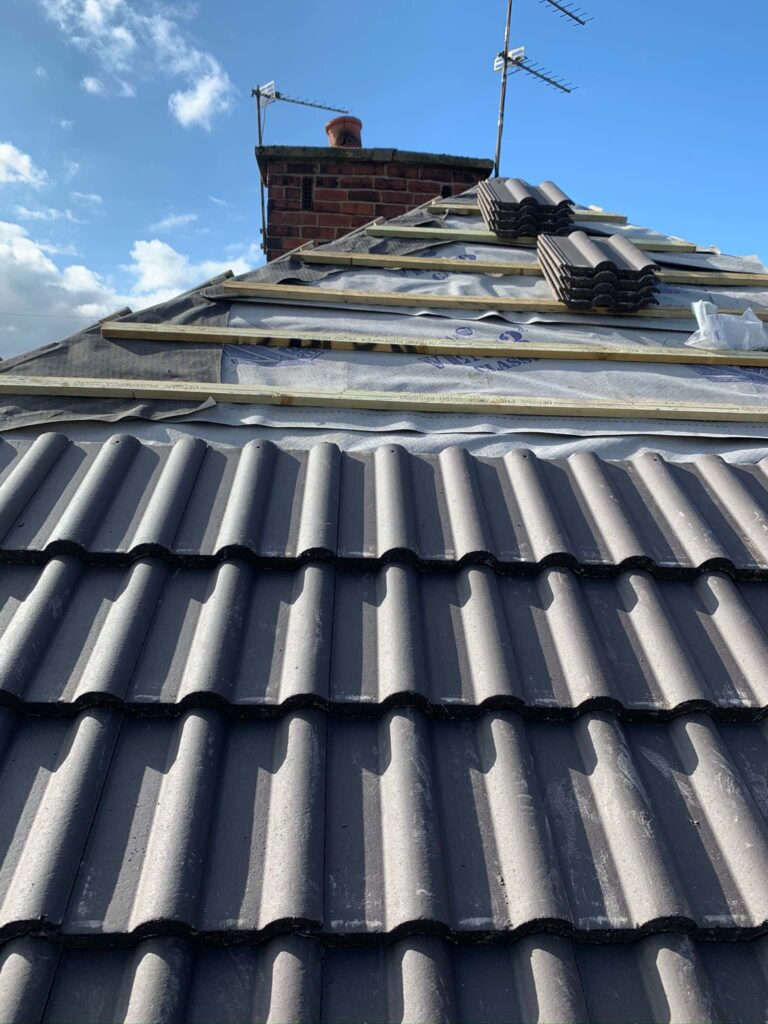
What Parts of a Roof Should Be Checked When Water Starts Getting Inside?
When water begins entering a property, the source is not always directly above the damp patch. Rainwater can travel along underlay, battens, rafters and other hidden surfaces before reaching a ceiling or wall. This means that checking only the most obvious area may fail to identify the actual defect.
A professional roof inspection should examine the complete route that water could have followed. For property owners in Northampton, Northamptonshire, knowing which components require attention helps explain why accurate leak detection is essential before repairs begin.
Key Roof Areas to Inspect When Water Is Getting Inside
A roof works as a complete weatherproof system. Tiles or slates provide the main covering, but flashing, valleys, ridges, underlay and drainage details all help direct water safely away from the building. A weakness in any one of these areas can result in moisture entering the roof space.
Tiles and Slates
Cracked, slipped or missing tiles and slates are common entry points for rainwater. Even a small amount of movement can interrupt the overlaps that normally carry water down the roof.
The inspection should assess the covering around and above the affected room rather than focusing solely on the position of the internal stain. Particular attention should be given to:
- Broken or fractured coverings
- Tiles or slates that have slipped out of alignment
- Loose or deteriorated fixings
- Gaps caused by incorrect overlaps
- Damage hidden beneath neighbouring materials
The supporting battens should also be considered if the coverings have moved repeatedly.
Roof Valleys
Valleys are channels formed where two pitched roof slopes meet. They carry a concentrated volume of rainwater, making defects in these areas particularly important.
Leaves, moss and debris can restrict water flow and cause it to spread beneath the adjacent roof covering. Valley linings may also split, corrode or move, while mortar around older valley edges can deteriorate.
A proper inspection should check the entire valley, including its upper section, lower outlet and the tiles or slates on both sides.
Lead Flashing and Roof Junctions
Flashing seals the places where a roof meets a chimney, wall, dormer or another structure. These junctions interrupt the regular tile arrangement and must remain securely weatherproofed.
Water may enter if flashing has lifted, cracked or separated from the adjoining surface. Gaps can also develop where individual sections overlap or where the surrounding mortar has failed.
Surface sealants can sometimes conceal the visible opening without resolving the underlying problem. The full junction should therefore be examined to establish how water is getting behind the weatherproofing.
Ridge, Hip and Verge Details
Ridge tiles protect the highest point of a pitched roof, while hip tiles cover the external meeting line between two slopes. Verges finish the exposed roof edges.
Cracked mortar, loose fixings or displaced components can allow wind-driven rain beneath these details. The damage may appear minor from ground level, but water can enter through small gaps and travel along the underlay before becoming visible inside.
Each section should be checked for stability as well as visible deterioration.
Chimneys
Chimneys contain several potential entry points, including flashing, mortar joints, leadwork and the masonry itself. Water appearing near a chimney breast does not necessarily originate from the closest visible surface.
The inspection should consider:
- Flashing around the chimney base
- Cracked or missing mortar
- Deteriorated masonry joints
- The condition of chimney coverings
- Junctions between the stack and roof tiles
- Signs of moisture inside the surrounding roof space
Tracing the water path is especially important because several defects may produce similar internal symptoms.
Flat Roof Seams, Edges and Outlets
On a flat roof, water may enter through splits, punctures, failed seams or deteriorated edge details. Areas around outlets and penetrations also require careful attention.
Standing water can highlight poor drainage or low points in the surface. If moisture remains on the roof for extended periods, it may exploit small weaknesses that are difficult to see in dry conditions.
The inspection should cover the whole roof rather than only the section above the leak, as water may travel beneath the surface layer.
Roof Windows, Vents and Pipe Penetrations
Any component passing through the roof creates a junction that must be sealed correctly. Roof windows, vents, flues and pipes can allow water inside if their flashing systems, seals or surrounding coverings become damaged.
Debris collecting above these features may also divert water into vulnerable gaps. The inspection should confirm that rainwater can flow around each penetration without becoming trapped.
Gutters and Drainage Points
Not all water ingress begins with a damaged roof covering. Blocked or poorly aligned guttering can overflow against fascia boards, external walls and roof edges.
Valley outlets and flat roof drainage points can cause similar problems if they are obstructed. Checking these areas helps establish whether water is entering through a roofing defect or because it cannot drain away correctly.
Underlay, Battens and Roof Timbers
The materials beneath the roof covering often provide valuable evidence about a leak. Underlay may be torn, brittle or punctured, while battens and rafters can show staining that reveals the direction in which water has travelled.
Where the roof space is accessible, the inspection should look for:
- Damp or discoloured timbers
- Wet insulation
- Torn or sagging underlay
- Water trails along rafters and battens
- Daylight passing through the roof covering
- Mould or persistent musty odours
These signs can help connect an internal damp patch with the external point of entry.
Why Accurate Leak Detection Matters
Repairing the area directly above a ceiling stain can be ineffective if water has travelled from elsewhere. A successful assessment compares internal evidence with the condition of the external roof.
This method allows the true cause to be identified and the repair area to be defined accurately. It also reveals whether moisture has affected supporting materials that need attention alongside the visible defect.
Conclusion
When water starts getting inside, the inspection should cover tiles or slates, valleys, flashing, junctions, ridges, chimneys, penetrations, drainage components and the concealed roof structure. The source may be some distance from the visible dampness, so examining the roof as a complete system is essential.
Northampton Roofing Services provides professional roof inspections and repairs in Northampton, Northamptonshire. If you have noticed water ingress, ceiling stains or dampness in your roof space, contact our team to arrange an assessment and identify the appropriate repair.
Call us on: 01604 279 698
Click here to find out more about Northampton Roofing Services
Click here to complete our contact form and see how we can help with your roofing needs.